Did you work out yesterday and wake up today with sore muscles, stiffness, and trouble moving? You probably need to recover! RGENtec is here to explain why, and how!

What happens inside our muscles when we work out?
Our body is made up of 639 muscles, all capable of contracting to produce movement or resist external force. Each muscle contains two types of fibers:
- Slow-twitch fibers: used for endurance efforts. They’re highly vascularized to carry oxygen and contract less intensely.
- Fast-twitch fibers: paler and highly innervated, built for quick, powerful contractions. These fibers are the ones that grow the most.
Inside each fiber lie protein filaments. When a nerve signal arrives, these filaments slide over one another, shortening the muscle fiber — that’s the contraction. To power this incredibly complex process, the muscle needs a specific fuel: adenosine triphosphate (ATP).
Depending on the intensity and duration of the effort, your body produces ATP differently:
- Anaerobic alactic system
For explosive, short, intense efforts lasting 3 to 20 seconds (a sprint or heavy lift), ATP is produced from phosphocreatine synthesized in the liver and pancreas.
- Anaerobic lactic system
For longer, but still intense efforts lasting up to two minutes, ATP is produced through glucose breakdown. This chemical reaction, glycolysis, also generates lactate. Contrary to popular belief, lactate is not responsible for post-workout muscle pain. Your muscles can reuse it as energy, or your liver can convert it back into fuel.
- Aerobic system
After two minutes of effort, the body uses oxygen along with the oxidation of sugars and fats to produce large quantities of ATP for endurance.
As muscles repeatedly contract, their fibers experience micro-damage. They then rebuild themselves stronger, thicker, and more resilient — which is how repetitive training sculpts and strengthens your muscles.
Exercise and muscle fatigue
Muscle fatigue is perfectly normal, especially after long workouts, regardless of your fitness level.
During exercise, your muscles burn large amounts of glycogen and lipids, pulling from your energy reserves. The fibers are pushed hard, especially during eccentric movements (when the muscle contracts while lengthening), creating microlésions that release enzymes and proteins outside the cells. This triggers:
- Temporary loss of strength and mobility
- Muscle swelling
- Inflammatory and immune responses
- Nervous system signals interpreted as pain
This combination of effects leads to muscle soreness (DOMS). While harmless, soreness can be uncomfortable and even once it fades, sometimes after up to five days, you still may not be fully recovered.
Excessively intense or unusual effort can also cause a painful, involuntary muscle contraction: a cramp.
The mechanics of muscle recovery
You’ve finished your workout and think you’re stronger now? Not quite the real progress happens during recovery.
Recovery helps eliminate fatigue, restore strength and mobility, and replenish your energy stores.
After being stressed, muscles need time to rebuild and regenerate. They must eliminate toxins produced during the effort. As they heal, they adapt to withstand future stress. Myofibrils increase in size and number, helping the muscle hold more water and nutrients.
Good recovery reduces pain, lowers the risk of injury and overtraining, and boosts progress in endurance, strength, and hypertrophy.
How to support muscle recovery?

Integrate recovery into your training plan
This means progressing gradually, spacing your sessions wisely, and intentionally building recovery time into your routine.
Sleep, hydration, and nutrition
Recovery is a long-term discipline — something you need to commit to every single day.
Eat a balanced diet that still feels enjoyable, but adjust your intake to your training, especially after your workouts.
- Proteins (plant or animal) help repair damaged muscle fibers.
- Carbohydrates (grains, fruits, legumes) restore glycogen reserves.
- Water replaces fluids lost during exercise. Sparkling water can also help replenish sodium and reduce cramps.
And sleep a lot. Aim for at least 8 hours per night, and up to 10 if you practice endurance sports.
Active recovery
The goal here is to move the same muscle groups you used in training, but without exceeding 60% of your maximum heart rate the day after exercise. Gentle yoga, soft Pilates, brisk walking, easy cycling, relaxed swimming… pick what feels good.
After a particularly intense session, you can also include 20 minutes of active recovery to ease your body back into a calm state.
Self-massage
After training,self-massage helps relax tissues and supports toxin elimination.
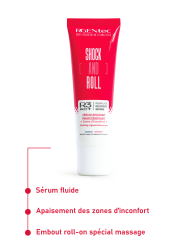
Shock and Rollfluid serum was specifically designed to soothe muscle and joint pain while speeding up the skin’s cellular regeneration, often challenged by sports. Its roller-ball applicator is perfect for self-massage.
The After Sport Ritual serum delivers an immediate cooling effect. It soothes the skin, supports regeneration, reduces fatigue sensations, and loosens muscle knots.
Listen to your body
If fatigue lingers, sleep becomes difficult, or motivation drops: rest. Ignoring your body’s warning signs raises the risk of overtraining. It’s always better to opt for a lighter session or a solid nap than to end up injured.