We still do not talk about them enough, yet they are a real issue for anyone who plays football, rugby, or any other sport on artificial turf. How can you prevent and treat turf burns? Discover our tips!

Turf Burns: More Than Just a Minor Injury
Anyone who has ever played a team sport on a grass field knows that turf burns can be painful, very painful. While there are currently no precise statistics on the subject, there is every reason to believe that athletes who play on artificial turf are more exposed to them than those who play on natural grass.
Why? Artificial turf is rougher than natural grass. It provides a harder landing surface. More importantly, it tends to generate heat when it rubs against bare skin, causing abrasions that can be painful and become a real obstacle to training and competition.
Turf burns, named after artificial turf, can also become infected. During falls, dirt and synthetic particles can become embedded in the wound. This type of abrasion is particularly vulnerable to bacterial infection and should therefore be monitored closely.
Fortunately, not all turf burns lead to infection. In many cases, they can heal relatively quickly. However, when the wounds are deeper, healing may take longer and can leave permanent marks on the skin.
How Can You Prevent Turf Burns?
These types of injuries are not inevitable, and there are several simple steps you can take to reduce the risk—or even avoid them altogether.
Wear Protective Clothing
Choose clothing that leaves as little skin exposed as possible: long-sleeved jerseys, compression garments, arm and leg sleeves, or sliding shorts. A few years ago, the international rugby federation, World Rugby, even authorized female players and later male players to wear leggings under their shorts to help prevent injuries.
Use Protective Equipment
Knee pads, elbow pads, shin guards, and other protective gear are also effective ways to prevent direct contact between the skin and the turf, helping to protect the areas most vulnerable to burns. You can also use protective dressings or specialized patches as a preventive measure.
Protect and Moisturize Your Skin
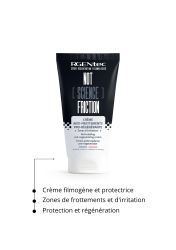
Well-hydrated skin is more flexible and more resistant to friction. That is one more reason to drink plenty of water and regularly moisturize your skin. Before matches, you can apply a protective anti-chafing cream. RGENtec’s Not Science Friction treatment, for example, is formulated without petrochemical-derived ingredients. Not only does it help prevent friction and abrasions, but it also provides soothing relief.
Adapt Your Playing Technique (Just a Little!)
On artificial turf, tackles and controlled slides can be particularly risky. It is recommended to practice these movements while minimizing the amount of skin that comes into contact with the surface.
Regularly Check the Condition of the Field Before Playing
Inspect the playing surface to identify any damaged, worn, or overly rough areas. If you spot any, report them so they can be repaired before they become a hazard.

Treating Turf Burns
If a turf burn does occur, it should be treated promptly to prevent complications.
Immediately after the injury, wash your hands thoroughly before touching the wound. Even better, if you have them available, and especially if you need to care for other players as well, put on sterile gloves. If there is any bleeding, apply sterile gauze to the wound to help stop it.
Clean the injury with a mild soap or saline solution. Make sure to remove any dirt, debris, or synthetic particles that may have become embedded in the wound to reduce the risk of infection. If necessary, use disinfected tweezers to remove any stubborn particles.
Gently pat the area dry with a fresh piece of sterile gauze.
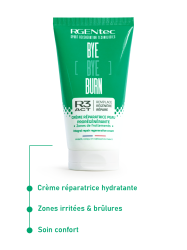
To support optimal healing, apply a generous layer of a healing cream, such as Bye Bye Burn balm. Rich and soothing, it provides immediate relief. Its patented formula, based on RGTA technology, helps promote skin regeneration, allowing the epidermis to repair itself more effectively and more quickly.
Cover the wound with a sterile, non-stick dressing and secure it with a clean, breathable cotton bandage.
Clean the wound, apply your healing treatment, and change the dressing every day, as well as whenever it becomes dirty or wet, until the injury has fully closed.
If blisters develop, do not pop them. However, if they burst on their own, disinfect the area immediately without removing the loose skin.
If your turf burn becomes unusually red, feels excessively warm, or if you develop a fever, these may be signs of an infection. In that case, seek medical attention as soon as possible.