Tendons are broad, thick, white tissues made mostly of collagen that connect muscles to bones. They store the energy generated by muscle contractions before transmitting it to the bones. Acting as shock absorbers, they distribute forces to prevent muscle overload. Extremely resistant to twisting, tendons function much like elastic bands. They help launch your movements with a much lower metabolic cost than muscles. For instance, a sprinter running 100 meters is largely propelled by the spring-like action of their Achilles tendons.
Tendons are very strong, but they can become sensitive to repeated mechanical stress. Since they have very little blood supply, they don’t adapt or recover as quickly as muscles when you increase your training load. That’s why tendinopathies are so common among athletes.
Muscle strengthening to prevent tendinopathies
A tendinopathy, in addition to being painful, can limit mobility and temporarily stop your physical activities. Fortunately, there are a few ways to help prevent them.
Important: If your tendons feel sensitive or painful, you should always consult a healthcare or sports professional!
- Progress gradually in your training.
- If you’re starting out or returning to sport after a long break, take it slow so your tendons have time to adapt to the new demands.
- Try isometric exercises like planks or wall sits to build strength while safely loading your tendons. Eccentric training, such as single-leg squats, helps lengthen tendons. Explosive movements, if introduced gradually, can also be very beneficial.
- Vary your activities whenever possible
- Prioritize recovery.One of the main causes of tendinopathy in athletes is overtraining. The tricky part is that muscles develop faster than tendons. When you feel fit and improving, it’s tempting to push harder — but your tendons may not be ready yet, leading to overuse injuries. Don’t overdo it and always listen to your body!
- Choose your equipment carefully. A racket that’s too heavy or shoes that don’t match your body type can significantly affect your movements and place unnecessary stress on your tendons, increasing the risk of injury.

How to treat tendonitis
If, despite all your precautions, tendinopathy sets in, the first thing to do — once again — is to consult a healthcare professional.
Depending on the type of injury and your level of physical activity, they can suggest a range of treatment options. In the meantime, you can follow these initial recommendations:
- Adjust your activity.Prioritize low-impact exercises. While you recover, choose activities that put minimal strain on the injured tendons — such as yoga, cycling, or swimming — to maintain your fitness. Progress very gradually, and stop immediately at the slightest pain.
- Stretch slowly before and after each session to maintain tendon flexibility and reduce irritation.
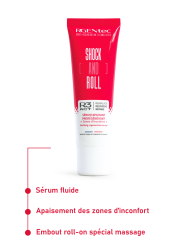
- Relieve discomfort.Tendinopathy can be painful. You can ease the discomfort with hot or cold therapy. The Shock and Roll roll-on, with its cooling ball applicator, soothes and calms when the pain starts to pull a little too much.