Who hasn’t stood in front of an entire wall of running shoes, completely overwhelmed by such an extensive selection?
Between maximalist and minimalist models, carbon plates, and promises of cushioning, stability, lightness, along with increasingly eye-catching soles, every brand is pushing technological innovation to enhance your stride… making it hard to see clearly.
Let’s be honest: when it comes to running, choosing your next pair can sometimes feel more exhausting and complex than a marathon itself. Finding the right shoe is a delicate process, as it can impact not only your performance and sensations, but also your health and overall well-being. Poorly suited equipment can lead to chafing, irritation, or blisters. It can also affect the quality of your stride, potentially leading to tendon inflammation and muscle pain.
To avoid this, when choosing the pair that will support your next challenges, it’s essential to ask yourself a few key questions.

What Are Your Goals?
We don’t all run the same way or for the same reasons.
You’re new to running and looking for a pair to get started. Or you run a few times a month, mainly to stay in shape.
Focus on comfortable shoes with cushioning that will protect your joints. Some running specialists also recommend starting with more minimalist shoes.
You’re a more regular runner, heading out several times a week. You’re starting to set yourself challenges maybe even a half marathon.
Choose shoes that provide both stability and lightness.
You’re aiming for performance over shorter distances, between 5 and 10 km. Go for lightweight, responsive shoes that support more explosive efforts.
You want to rack up the miles from marathons to ultra races, you’re going the distance. Some models are specifically designed for endurance: lightweight and comfortable.
What Type of Terrain Do You Run On?
Whether you run on asphalt, trails, or rocky paths, your feet won’t have the same needs.
Smooth road surfaces require cushioning to protect your joints. More uneven and technical terrain, like mountains or forest trails, demands grip and stability.
Choosing Running Shoes Based on Your Body Type
Women’s shoes, men’s shoes it’s not just marketing.
Women’s models are generally designed for smaller, lighter body structures than men’s. But regardless of gender, your weight and height are key factors to consider when choosing your next pair.
Analyze Your Stride
There are three main types of stride, and they have a major influence on the shoes you should choose. None of them are abnormal or need to be corrected they simply describe how your feet and joints move when you run.
Supinated stride:
Around 10% of runners. Your foot strikes more on the outer edge.
Neutral (or universal) stride:
About 50% of runners. The center of the heel hits the ground first, then rolls forward in a straight line.
Pronated stride:
Around 40% of runners. The push-off happens with more weight on the inner part of the foot.

Pay close attention to your shoe size!
The trap especially when choosing your first pair is thinking that because you usually wear a size 40, you should also go for a size 40 for running.
When you run, your foot swells and spreads out. If you choose your usual size, you may end up with blisters, burning sensations, irritation, or even lose toenails. That is why trying shoes on is essential: your toes should not touch the front of the shoe. You should be able to fit roughly a thumb’s width between the end of your toes and the front of the shoe. Also pay attention to the width of the shoe: your feet should feel supported, but not cramped. Here too, keep in mind that your feet will swell during your runs. As tempting as it may be, the design of the shoe should never take priority over comfort.
Choosing the Right Drop
We told you choosing running shoes is an adventure. But the final step in figuring out which pair is the right one is the drop.
The drop is the height difference between the heel and the toes. It can be zero, or go up to 10 mm or more on some models.
Knowing which drop suits you also depends on your stride type, but on your sensations as well. A drop above 6 mm is generally recommended for runners who land on their heel first which is about 90% of runners. Others land first on the midfoot or forefoot. For them, lower drops are usually recommended.
But in reality, what matters most will always be your sensations, your comfort, and your preferences. And if you find choosing running shoes too complicated, you can always try the barefoot experience who knows, you might love it.
Beyond Your Shoes: Take Care of Your Feet
Whatever your level, goals, running practice, gender, height, or stride type, runners will almost inevitably face issues at some point: blisters, skin abrasions, burning soles, toenail pain, aching joints…
So beyond choosing the right shoes, do not forget to take care of your feet.
Gentle exfoliation to reduce calluses. Massage to reactivate blood circulation and soothe overheated feet.
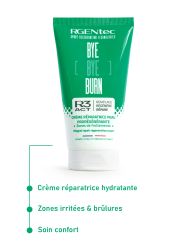
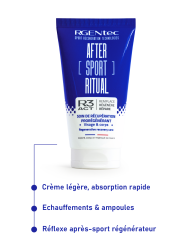
After a run, the cooling effect of After Sport Ritualworks wonders. Targeted care to soothe those dreaded blisters, support healing, and speed up skin regeneration. With the aptly namedBye Bye Burn, you will be back on your feet as quickly as possible.
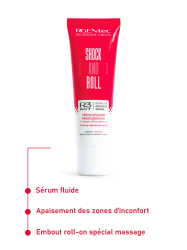
And finally, a swipe of roll-on to ease aching joints, sore heels, or soles sensitized by impact bonus points for the ultra-relaxing effect of the Shock & Roll ball applicator.