Alice Michel is a sports physiotherapist and Medical Coordinator for the women’s cycling team "Ma petite Entreprise". Wearing both hats allows her to take an enthusiastic view of women’s sport and the progress that still needs to be made toward greater equality and a better understanding of female physiology in athletic performance.

Writing the History of Women’s Cycling
Alice Michel was working as a sports physiotherapist at Postural Training, a specialized clinic in Chambéry, when Vincent Lavenu and Michael Amand, respectively Sports Manager and General Director, invited her to join the My Small Business project.
"I immediately connected with the project," she explains. "I love the idea of a team representing the values of small businesses rather than relying on a single major sponsor. The budget may not be the same, but we are all passionate about what we do. And on top of that, it’s a 100% women’s cycling team! That’s truly unique in this sport. "Ma petite entreprise" is part of something important, something that reflects real change."
Since 2022, the traditionally male-dominated world of cycling has undergone a major transformation with the launch of a women’s version of one of its most iconic competitions. In 2025, 25.7 million people in France followed the event. This growing visibility is part of a broader trend.Since 2018, television coverage of women’s sport has increased by 49%.
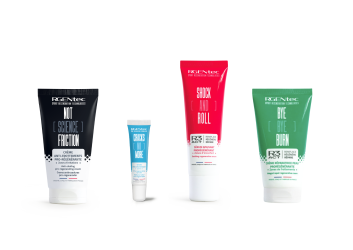
In reality, the My Small Business project is part of a virtuous cycle: greater media exposure attracts stronger sponsorship opportunities, which in turn leads to better working conditions for professional athletes. It is an initiative that RGENtec is proud to support as an official supplier of the team.
"We employ ten cyclists. This allows them to focus on their sport, but we also make sure they continue their education and prepare for life after their athletic careers. Some of our riders are still students, and it’s important that they also think about their future beyond cycling. When we choose to work with an athlete, we consider the whole person—not just what they can do on a bike. The salaries we offer are not yet on par with those of male athletes, but we are moving in the right direction."
Well-Being, Balance, and Performance: The Winning Formula
Listening to Alice Michel, it becomes clear that this unique cycling team’s mission goes beyond promoting women in elite sport and entrepreneurship. Ma petite Entreprise is also committed to combining performance with well-being.
"My job is to take care of our athletes. It’s not always easy because they live all across France. But respecting their personal lives and maintaining a healthy balance is essential to us, so we constantly adapt. We work remotely, building strong relationships with each athlete’s medical and coaching teams. Even so, we regularly come together during races and training camps. And whenever necessary, we organize appointments in Chambéry."
_sophie-remise.jpg)
Athletes from the My Small Business team testing RGENtec products – Photo credit: Sophie Remise
Recovery plays a central role in athlete support, although Alice Michel puts things into perspective.
"Our team is made up of professional athletes. Even for those experiencing their first season at this level, they have worked extremely hard to get here. They understand how important it is to take care of themselves. Cycling is a particularly demanding sport. Neglecting recovery and healthy lifestyle habits is one of the fastest ways to fall behind. Every aspect of performance must be constantly optimized."
That said, she regularly reminds athletes of the fundamentals.
"The foundation is always the same: sleep, nutrition, and hydration. The daily life of a cyclist is demanding, and they adapt their personal lives to the requirements of their sport, particularly when it comes to meal quality and sleep schedules.
That is why My Small Business places so much importance on maintaining a healthy balance between sporting commitments and personal life. We do our best to adapt to each athlete’s schedule, even when it can be challenging. After races and training sessions, we focus on physical recovery through massage therapy, stretching, and mobility routines. We may also use compression boots or self-massage guns."
Women’s Sport and Health: Alice Michel’s Commitment
Alice Michel knows that her role as Medical Coordinator is a unique one. In fact, it is one of the reasons she was so enthusiastic about joining the project.
"When I completed my physiotherapy training in 2017, and later my sports physiotherapy qualification in 2021, there was almost no discussion about the physical and physiological specificities of the female body in sport. My Small Business helps bring greater visibility to these issues."
For many years, discussions around performance, recovery, and the impact of sport, especially at the elite level, were largely based on the male body. This has had consequences not only for female athletes’ performance, but also for their health.
"In cycling, people long believed that the lighter you were, the better you performed. But that assumption completely overlooked the reality of athletes’ hormonal balance. Women experience complex hormonal cycles that are essential to their health: they ovulate, they menstruate, and their estrogen and progesterone levels fluctuate throughout the menstrual cycle. By promoting thinness as a key driver of performance, we increase the risk of developing REDs syndrome."
 sur la santé des athlètes_1.png)
REDs, or Relative Energy Deficiency in Sport, affects athletes, particularly female athletes, whose energy intake is insufficient to meet the demands of their physical activity. REDs can lead to hormonal imbalances and menstrual cycle disturbances, including amenorrhea, which is the absence of menstruation. When amenorrhea persists over time, it is associated with decreased bone mineral density and an increased risk of stress fractures.
"The body switches into energy-saving mode. One of my closest friends likes to explain it this way: it’s a bit like driving a car and suddenly not being able to turn on the headlights because there’s no longer enough battery power.
Having a menstrual cycle is important—not just when you want to have children. It’s a sign of good health. The trap with REDs is that, in the early stages, there’s often a honeymoon period when athletes perform exceptionally well and feel great. The problem is that REDs affects many aspects of health beyond bone health: sleep quality, immunity, cardiovascular function, neurocognitive function, gastrointestinal health, and more.
When I treat women who appear to be suffering from REDs and come to see me for muscle injuries, I notice that their healing process takes longer."
As a result, Alice Michel and her team focus heavily on education, helping athletes change habits and better understand their bodies in a supportive and caring environment.
"Treating this syndrome is not as simple as eating more for a day and expecting the body to rebalance itself. Recovery takes time—sometimes even several years. These are still topics that are not discussed enough.
Menstruation is often viewed as a barrier to performance. Many female athletes feel that not having periods is actually convenient, especially when they are painful or because of the practical challenges they can create. That is why follow-up care with Christelle Dromer, our sports physician and specialized gynecologist, is such an important part of their support system. It helps them find the solutions that work best for them."
Improving Awareness of Pelvic Floor Health in Female Athletes
Another cause that Alice Michel is particularly passionate about is pelvic floor health.
Female athletes still do not receive enough support when it comes to understanding their pelvic floor, despite its essential role. To give you an idea, Carole Maître, a sports physician and gynecologist at INSEP, conducted a study in 2014 involving 404 elite female athletes. The results showed that 72% suffered from stress urinary incontinence. Statistics like these really make you want to drive change. I was very involved in sport myself, and at the time, apart from hearing ‘pull your belly button in,’ there was very little discussion about the pelvic floor. I find it incredible that most women only become aware of it after giving birth, even though urinary leakage affects so many people."
"This is an area I would really like to develop this season with the My Small Business cyclists. The pelvic floor plays a vital role in trunk and hip stability. It is especially important when cyclists climb out of the saddle, accelerate, sprint, or push heavy gears. More broadly, it is also something we need to discuss in preparation for life after cycling. I know too many women who have spent years on a bike—which is a supported, low-impact sport—and then started running, only to be caught off guard by symptoms they did not understand."
As Alice Michel makes clear, supporting female athletes goes far beyond performance metrics and race-day results. It is a comprehensive approach that takes into account their personal history, their current sporting practice, competition demands, overall well-being, and what comes after their athletic career.
It is a long-term vision that brings together technique, performance, and results within a broader framework where well-being remains a central priority.
The riders of My Small Business continue to achieve outstanding results, with a legendary race on the horizon from August 1st to August 9th. And we will be there too, with our regenerative care products in hand, ready to support and cheer them on!
To follow Alice Michel, visit her Instagram account: https://www.instagram.com/alice_physio/
You can also follow Postural Training: https://www.instagram.com/postural.training/