Democratizing cycle touring and making ultra-cycling accessible: that is Axel Carion’s mission. A portrait of an explorer who sees the bicycle as an adventure and experiences performance as a journey.

Deconstructing the image of cycling to make it accessible
In 2024, the bicycle was the most sold individual means of transport in France, ahead of motorized two-wheelers and even cars. Since the Covid crisis, cycling trips have almost doubled. This is especially visible in major cities: the “little queen” has made a strong comeback that seems here to stay.
We like cycling, that’s true, but mostly as a means of transportation. We use it to go to work or for practical, everyday trips. Cycling as a sport, however, is stagnating. In 2020, 5.5% of French people over the age of 15 said they regularly practiced mountain biking. Road cycling, on the other hand, was practiced by only 1% of the population. The 2024 Olympic Games shone a spotlight on cycling sports, with the French Cycling Federation recording a 20% increase in license holders, particularly in BMX. But with fewer than 20,000 licensees in total, the practice remains far too niche. Why?
Axel Carion’s diagnosis is unequivocal.“We’ve been blinded by the most high-profile cycling competitions. Cycling suffers from the clichés of performance-driven sport. It’s seen as a male discipline, where you have to ride in groups at 50 km/h on very expensive machines. Legendary stories were put into our heads that never really existed. It’s urgent to deconstruct this vision.”
Changing the image of cycling, highlighting different narratives, and offering experiences that challenge the very concept of performance,this is the challenge he has chosen to take on.
Axel Carion’s love at first sight with ultra-cycling
Axel Carion discovered cycle touring and ultra-cycling by diving straight into the deep end.
“I entered the world by crossing Slovakia and Ukraine through the Carpathians over 1,200 km. A real commando-style initiation! I left with a 45 kg bike, my two-second tent, and a huge sleeping bag. I had never slept outside on a bike, never cooked outdoors like that. It was a revelation. That was 15 years ago, and it slowly derailed my life until I created BikingMan, to pass on what my friends had made me experience back then.”
Axel Carion describes himself as an explorer. What he seeks on expeditions is to experience the link between landscapes and migrations, and to understand why and how human groups move. His passion for terrain and environments grew alongside his practice.
“It was cycling that allowed me to discover incredible places. Pedaling across Peru, for example, let me meet people I would never have encountered through traditional tourist routes. It’s a slower way of traveling. On your bike, you enter the territory literally. You plow the land,” he explains.
However, describing Axel Carion only as a traveler would be reductive, as he is clearly driven by a desire to pass on his passion for cycling and a new vision of performance.
“Technology has blinded us. Yesterday’s daily life is today’s feat. Discovering cultures other than my own by bike made me realize that the living conditions we had just a few decades ago, and that many people around the world still experience, are far more demanding than any sporting performance.
We’ve built an image of cycling centered on competition, even though the bicycle also served as a bridge between horse travel and motorized vehicles. Nineteenth-century cycle tourists accomplished real feats, with porters and camera equipment weighing up to 25 kg. Cycle touring and ultra-cycling are, in fact, a return to our roots.”

Breaking free from traditional cycling practice
Nostalgic, Axel? Quite the opposite. For him, returning to the fundamentals of cycling to make the sport less intimidating is not enough.
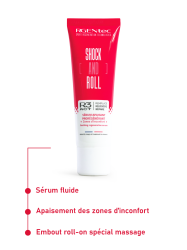
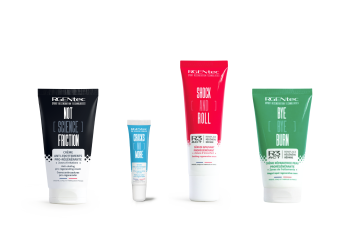
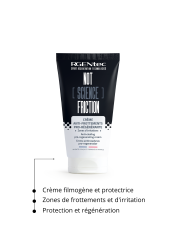
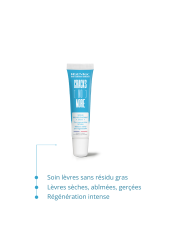
“We’re living in a key moment, supported by explosive technological development, driven by equipment brands—RGENTec among them.
Not so long ago, cycling was an elitist sport. Today, it’s becoming increasingly accessible. With a bicycle, humans achieve incredible energy efficiency. On top of that, countless innovations have helped break the old codes. The bike I used when I set off for Slovakia had heavy gearing. It was very heavy—exhausting, and therefore hardly accessible. And I didn’t have access to the same equipment or recovery care we have today. When people tell me, ‘No, cycling isn’t for me, it hurts my back or my saddle area,’ that’s simply a sign of unsuitable equipment and poor recovery solutions. Ultimately, innovative brands like RGENTec support the practice and allow us to free ourselves.”
That is Axel Carion’s bigger vision: to emancipate cycling by combining performance with experience, and by promoting an inclusive, accessible, human, and joyful way of riding. When he talks about the BikingMan—the ultra-cycling race series he launched in 2015, records and rankings barely come up. What he offers is an adventure, an experience.
“I imagined BikingMan as a bubble that responded to a community need for transformative experiences. It’s a journey. The approach is less extreme and less frightening than in other ultra-endurance sports. More and more participants are coming from trail running, often because they can no longer run due to knee damage. On BikingMan races, it’s not unusual to see athletes over 75 years old finish the events. Cycling is a supported sport, gentler on the body. It’s a different kind of endurance—slow, long resistance rather than VO₂ max effort. That also makes it more inclusive, because women’s physiology is ideal for this type of challenge. In 2023, a woman—Laurianne Plaçais—won the overall BikingMan, well ahead of the men. She absolutely crushed them!”
While the race formats may seem intimidating at first glance, they were designed so that anyone can take on the challenge under the best possible conditions.
“We developed a 500 km format with a 60-hour cutoff, and a 1,000 km format with a 120-hour cutoff. In practical terms, that’s about 180 km per day over three or six days, with panniers. Participants can choose: either go all out without sleeping, or ride at their own pace and enjoy a small guesthouse each night. Guess which option is the most popular?”
For more information on ultra-long-distance cycling and BikingMan, follow Axel on hisYouTube channel and on the BikingMan channel.